Can a Nurse Test My Baby for Flu, RSV or Strep at Home?
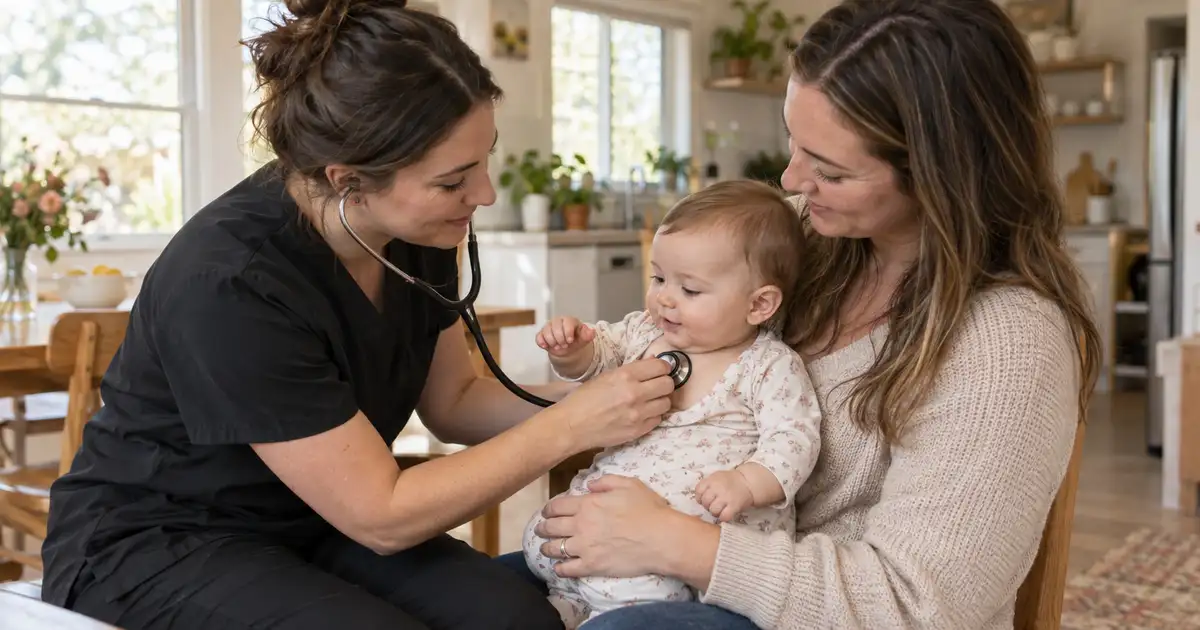
Yes. Rapid tests for COVID, influenza, RSV and strep can be run in your own house, for your baby and for everyone else living in it, with results the same night rather than after a waiting room.
What that buys you is narrower than it sounds and more useful than it sounds, and both halves are worth understanding before you rely on it.
Why it matters more with a newborn
For most families a sick child is an inconvenience. With a newborn in the house it is a logistics problem with a clock on it.
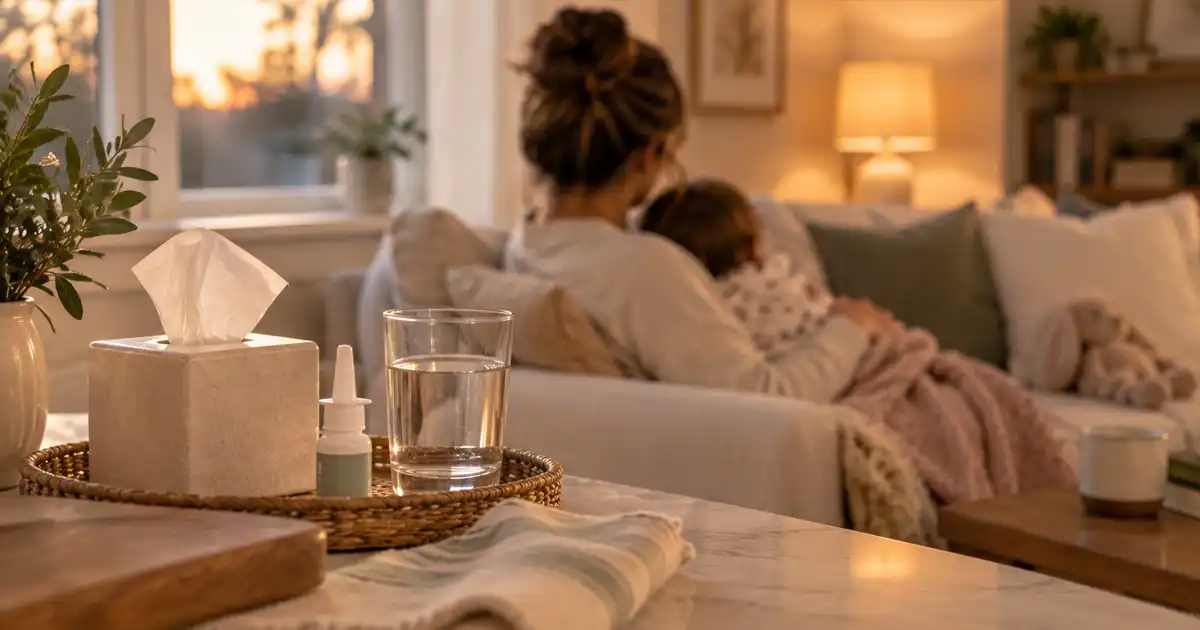
The older one comes home from school with a sore throat on a Tuesday. You now have a question you cannot answer and three bad options: take a newborn into an urgent care waiting room full of exactly what you are trying to avoid, wait until morning and hope, or separate the children in a house that is not built for it.
Testing at home removes the waiting room from that list. That is the whole value proposition, and it is a practical one rather than a clinical one.
What can actually be tested
COVID, influenza, RSV and strep. Those four cover most of what circulates through a household between October and March, and they are the four where knowing changes what you do next.
Testing is not limited to the baby. In practice the person who most needs swabbing is usually the older sibling, because they are the reason the question exists.
What a result settles, and what it does not
A positive result is genuinely useful. It names the thing, it tells you roughly how it spreads, and where treatment is appropriate our nurse practitioner can provide it.
A negative result is weaker information than people expect. It narrows the field. It does not mean nothing is wrong. Plenty of things that make a baby unwell are not on any of those four tests, and rapid tests in general are better at confirming than at excluding.
So the honest framing is: a test is one input. How your baby is feeding, breathing, and behaving is a better signal than any strip, and that is true no matter what the result says.
What your nurse does with it
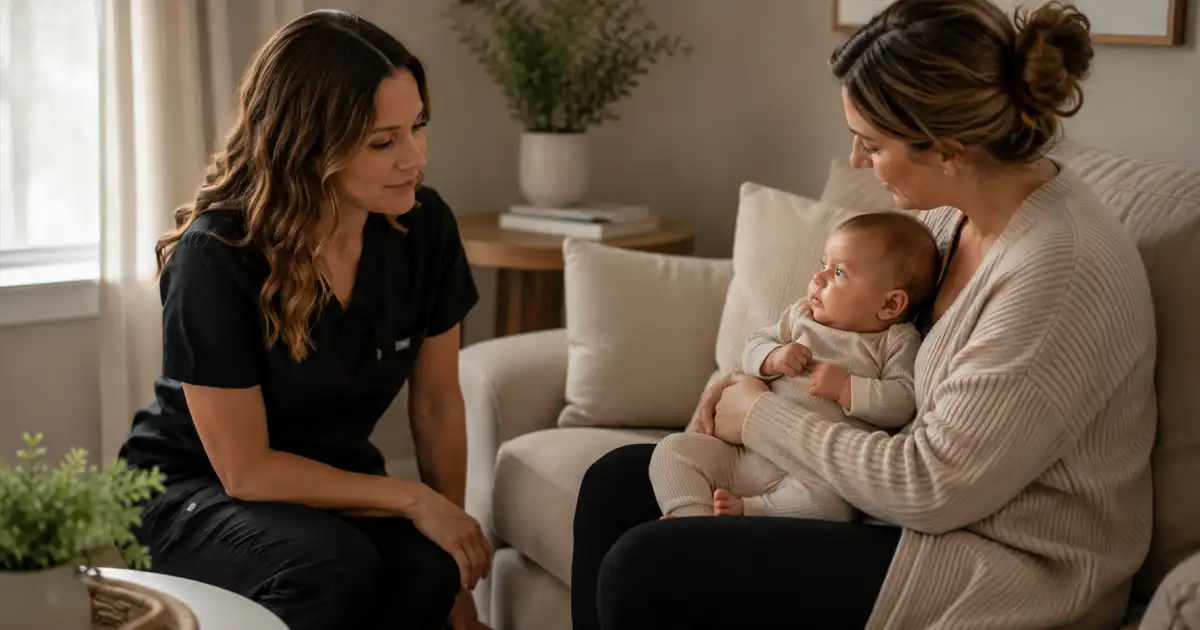
Measures, records, and tells you. The result goes in the written handover along with everything else from the shift, which means when you speak to your pediatrician you are handing them a documented result and a documented night rather than a recollection.
Where a prescription is appropriate, our nurse practitioner provides it. Your nurse is a registered nurse and does not prescribe, and the line between those two things is not a formality.
When not to bother testing
Some situations need to be seen, and a swab is a detour.
- Any difficulty breathing: fast breathing, pulling in at the ribs or neck, grunting, pauses
- A fever in a baby under three months, which is its own category of urgent
- Feeding much less than usual, or noticeably fewer wet diapers
- Unusual sleepiness, floppiness, or a baby who is hard to rouse
- Anything that feels wrong to you, which is a real signal and not a nervous one
Call your pediatrician for those, and for an emergency call 911. Testing is for answering a question tonight, not for postponing care that should happen now.
The short version
If somebody in the house is sick and there is a newborn in the next room, the value is not really the test. It is not having to decide, at nine at night, whether to put your baby in a car and take them somewhere full of sick people.
Common questions
Can you test a newborn for RSV at home?
Yes. Rapid testing for COVID, influenza, RSV and strep can be done in your home during a shift. A result helps you and your pediatrician decide what happens next, and it is information rather than a treatment plan.
Can you test the rest of the family too?
Yes, and this is usually the point. Older children bring things home from school, and knowing whether the six year old has strep changes what you do about the six week old. Testing is available for anyone in the house.
Can you prescribe something if the test is positive?
Your nurse is a registered nurse and does not prescribe. Where a prescription is appropriate, our nurse practitioner provides it. For anything outside that, the result and the documentation go to your pediatrician.
Is a negative test the all clear?
No. A negative result narrows things down, it does not rule everything out, and a baby can be unwell with something nobody swabbed for. How your baby looks and behaves matters more than the strip.
When should we skip testing and just be seen?
Any trouble breathing, a fever in a baby under three months, poor feeding, dehydration, unusual sleepiness or floppiness, or anything that simply feels wrong. Call your pediatrician, and in an emergency call 911. Testing is for narrowing down a question, not for delaying care.