What Does a Private Newborn Class Actually Cover?
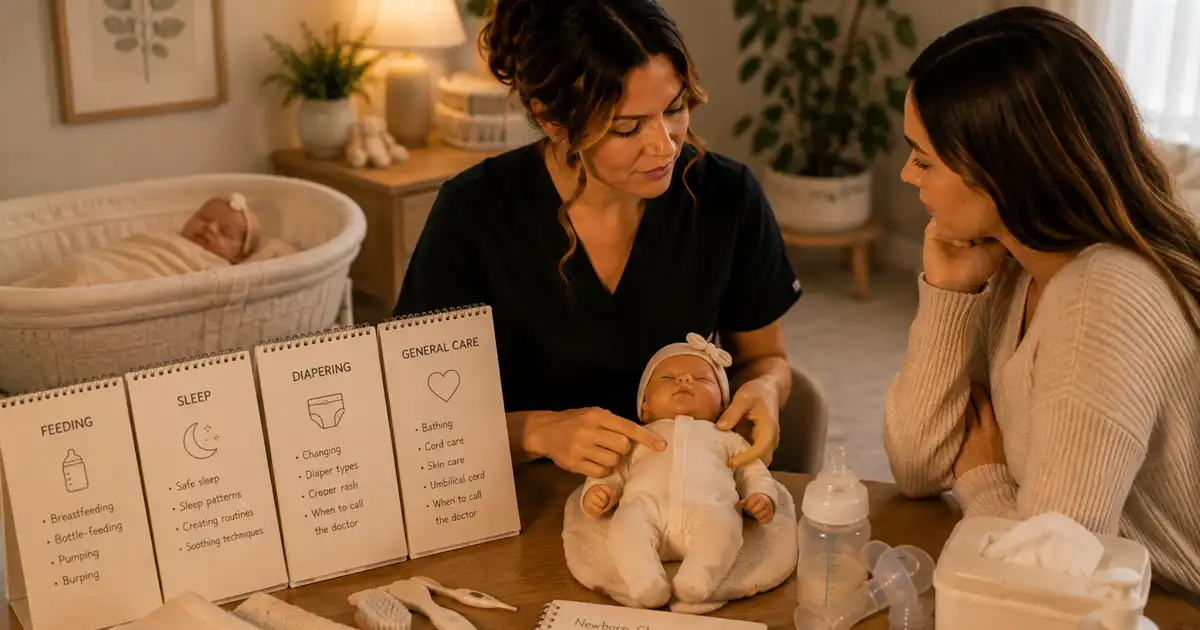
Whatever you ask it to. That is the honest answer, and it is the main difference between a private class and a group one.
But most families want roughly the same ground, so here is what a private newborn class usually looks like.
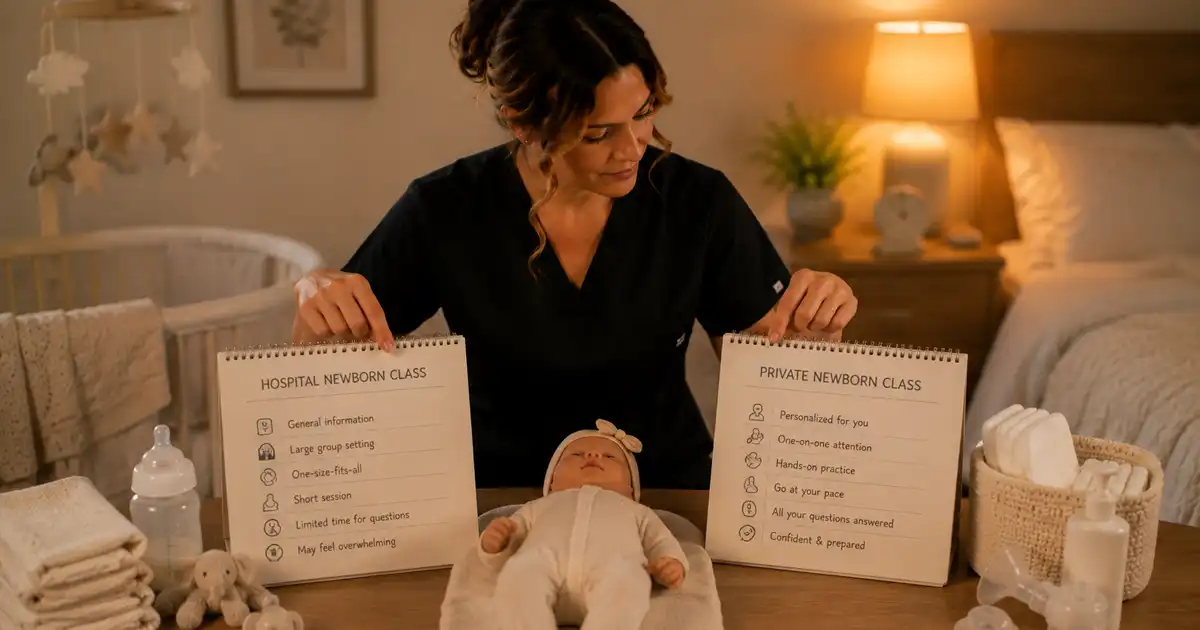
If you are still deciding between this and the class your hospital offers, that comparison is its own question.
Most of it is not information
Worth saying before the list, because it changes what you should expect.
You can read about swaddling. You have probably already watched four videos about it. What you cannot get from a video is somebody watching you do it and saying bring that corner tighter, and lower, his hips need to move.
That is most of what a private class is. Not a lecture on newborn care, but somebody correcting your hands while you do it, with your baby, on your couch.
The handling skills nobody demonstrates for you
These sound basic. They are also the things new parents are most quietly nervous about, and almost nobody gets shown properly.
Holding and picking up. Supporting the head and neck, moving a newborn from a crib to your shoulder without that half-second of panic, passing a baby to someone else.
Diapering, including what to do while the umbilical cord is still healing, what is normal in a newborn diaper in the first week, and how to tell when something is not.
Bathing. Sponge bathing before the cord comes off, how to hold a wet and surprisingly slippery baby, water temperature, and how often is actually necessary, which is less than most people assume.
Cord care. What normal healing looks like, what to leave alone, and what would make you call.
A lot of it is feeding
Usually the biggest section, whichever way you are feeding.
If you are breastfeeding: positioning, what a deep latch looks and feels like, how to tell your baby is actually swallowing rather than comfort sucking, and what to watch instead of the clock.
If you are bottle feeding, with formula or expressed milk: paced bottle feeding, flow rates, positioning, and how to stop when your baby has had enough rather than when the bottle is empty.
If you are pumping: parts, cleaning, storage, and building something you can actually sustain.
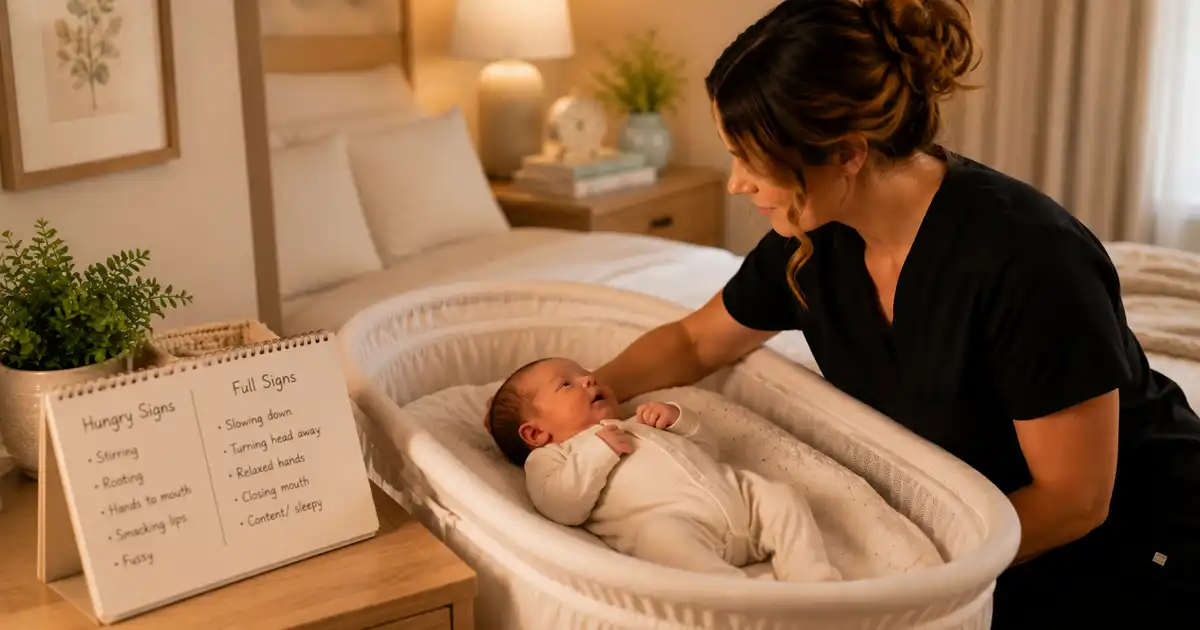
And whichever you are doing: hunger and fullness cues, which take about four minutes to explain and change every feed afterward.
A class is not a lactation consultation. If something is genuinely wrong with feeding, that goes to an IBCLC or your pediatrician, and a good class will tell you so rather than working around it.
Safe sleep, applied to your actual room
The difference between reading guidance and applying it.
Current AAP recommendations, then the crib or bassinet you actually bought, where it sits, what is in it, and the products you have been given that may not match the guidance. Plenty of things marketed for infant sleep are not consistent with it, and that is genuinely hard to work out on a phone at 11pm.
Plus swaddling: how to do it, and the harder question of when to stop. If safe sleep is the only thing you want covered, a focused safe sleep visit is the shorter option.
Crying, soothing, and what is normal
Soothing techniques, worked through with your baby rather than described. What order to try things in, and what to do at the point where you have tried everything.
What normal actually looks like. Newborn noises, startles, sneezing, hiccups, the alarming breathing pattern that is fine, the color changes that are fine. A great deal of first-week anxiety is normal newborn behavior nobody warned you about.
Realistic sleep expectations. Not sleep training. What a newborn actually does, so you are not measuring yourself against something that was never going to happen.
When to call someone
Often the most useful hour of the whole thing.
Not a symptom list to diagnose from, but a framework: what warrants a call today, what can wait until the appointment, what is an emergency, and how to describe what you are seeing so the person on the phone can help you.
Parents who have this leave far less frightened, and they call their pediatrician at better moments.
What a class should not claim to cover
Worth knowing before you book anything, from anyone.
Infant CPR is a separate class. A newborn class can talk about it, but certification comes from a proper CPR course with hands-on practice and an instructor who signs you off. Take one. Do not accept a fifteen-minute mention inside another class as a substitute.
Car seat installation is a separate job too. A Child Passenger Safety Technician checks and installs seats, often free through hospitals and fire departments. A newborn class can tell you what to look for; it should not be your final check.
And it is not medical care. A class does not diagnose, treat, or replace your pediatrician. If a class positions itself as a substitute for pediatric follow-up, that is the wrong class.
Who else should be in the room
Your partner. Half of this is skills, and skills split. A partner who has been shown how to swaddle and bottle feed properly is a genuinely different partner at 3am.
Grandparents, if they will be doing meaningful care. Safe sleep guidance has changed considerably in a generation, and hearing it first-hand from a nurse is much easier than being told second-hand that they did it wrong.
A nanny or regular caregiver, for the same reason.
If an older child is also about to meet the baby, that is worth planning too, and the sibling introduction has a few things in it people wish they had known.
Before the birth, after it, or both
Before means the house is sorted, you have practiced on a doll, and you have one less thing to think about.
After means practising on your actual baby, which is not the same skill, and asking the questions you have actually accumulated rather than the ones you imagine you will have.
We teach both, and if you are unsure, book it after. Plenty of families do a short session before and a longer one once the baby is home.
Does insurance cover it?
Usually not, for a private class. Some hospital classes are free or heavily discounted if you are delivering there, and some HSA or FSA plans will cover parent education, which is worth a five-minute call to check.
It is worth asking rather than assuming, but do not plan around it.
Do you actually need one?
No. People have raised babies without one for a very long time.
What it buys you is doing less of the learning while exhausted, recovering, and holding a newborn for the first time. If there is a lot of newborn experience already in your house, or family nearby who can show you, you may not need it. If there is neither, it is worth considering.
What to remember
- A private class covers what you choose. Most families pick five or six topics
- The value is somebody correcting your hands, not the information itself
- Feeding is usually the biggest part, whichever way you are feeding
- Safe sleep is worth doing against your actual crib rather than a diagram
- Infant CPR and car seat installation are separate, and should be
- Take a partner or a grandparent. Skills split
- Before the birth, after it, or both
Topics worth choosing from
- Holding, supporting the head, and picking up a newborn confidently
- Diapering, including cord care while it is healing
- Bathing, sponge bathing, and how often is enough
- Feeding: breast, bottle, pumping, or a combination
- Paced bottle feeding and reading fullness cues
- Safe sleep applied to your actual crib and bassinet
- Swaddling, and when to stop
- Soothing and settling a baby who will not go down
- What normal newborn behavior looks like
- Sleep expectations, so you know what is realistic
- When to call your pediatrician and when to wait
- Preparing the house before the baby arrives
- Getting a partner or grandparent up to speed
- Anything specific: twins, reflux, a NICU stay, going back to work
Most families pick five or six. Bring the list to your first conversation rather than trying to decide on the spot.
Common questions
What does a private newborn class cover?
Whatever you ask it to. Most families want handling, feeding, bathing and cord care, safe sleep, soothing, and knowing when to call someone. Most of it is not information, it is somebody watching you do it and adjusting your hands.
Who should be in the room?
Anyone who will be caring for the baby. Partners, grandparents and anyone doing overnight shifts all get more out of being taught together than being briefed afterward.
How long does a private newborn class take?
It depends on how much you want to cover and how much of it is hands-on. Tell us what you want out of it and we will tell you what that realistically takes.
What does a class not cover?
It is education rather than clinical care. It does not diagnose anything, and it does not replace your pediatrician. Where something needs a clinical answer, we tell you that rather than guessing.
Read the video transcript
People ask what we actually cover in a newborn class, and the honest answer is whatever you want us to. That is the whole point of a private one.
But most families end up wanting the same things.
Handling comes first. Holding, picking up, supporting the head, diapering around the cord while it is healing, sponge bathing. These sound basic, and they are the things people are most quietly nervous about, and almost nobody gets shown properly.
Then feeding, which is usually the biggest part. Whether that is latch and positioning, or paced bottle feeding, or pumping logistics, depends entirely on you.
Safe sleep, but applied to the crib you actually bought, in the room where it actually is. That is different from reading the guidance.
Soothing, what normal newborn behavior looks like, and realistic sleep expectations so you are not measuring yourself against something that was never going to happen.
And then the one people tell me afterward was the most useful: when to call. Not a list of symptoms, but a framework for what warrants a call today, what can wait, and how to describe what you are seeing.
Two things I would tell you a class should not claim to cover. Infant CPR is a separate certified class, please take one. And car seat installation belongs with a certified technician, which is often free through your hospital or fire department.
Bring your partner. Bring a grandparent if they will be helping. Half of this is skills, and skills split.