Is a Private Newborn Class Worth It If the Hospital Offers One?
Take the hospital class. It is free or included, the curriculum is sound, and nobody should skip it to pay for something else.
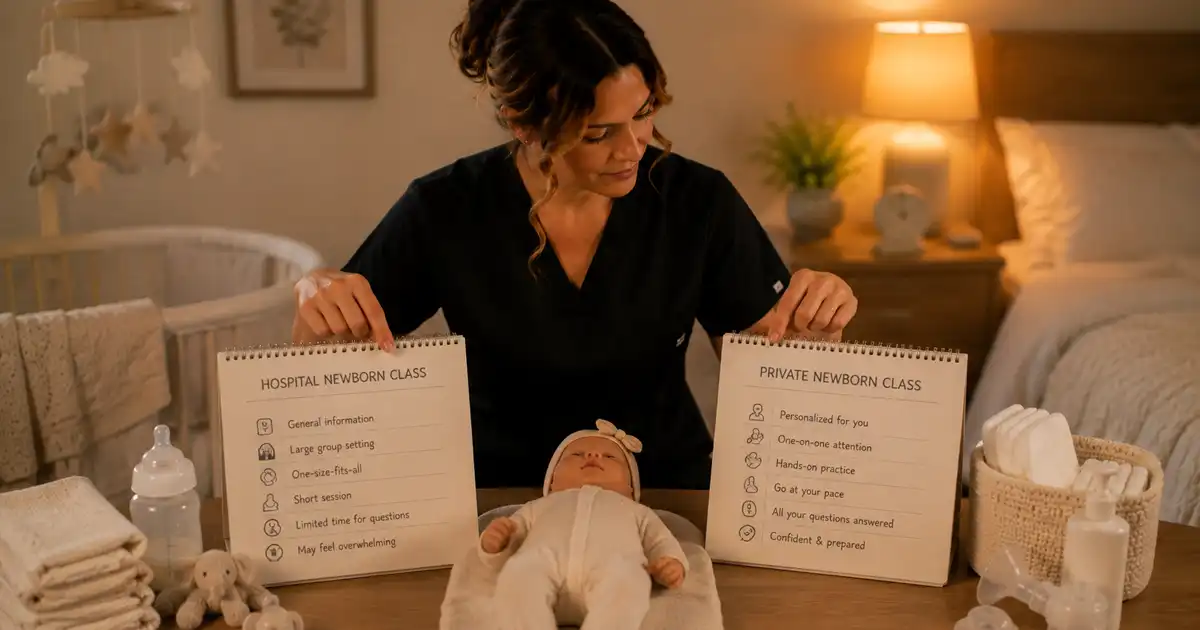
Where it runs out is not the information. It is the two things a group format structurally cannot do: watch your hands, and answer the question you did not want to ask in front of nineteen other couples.
What the hospital class does well
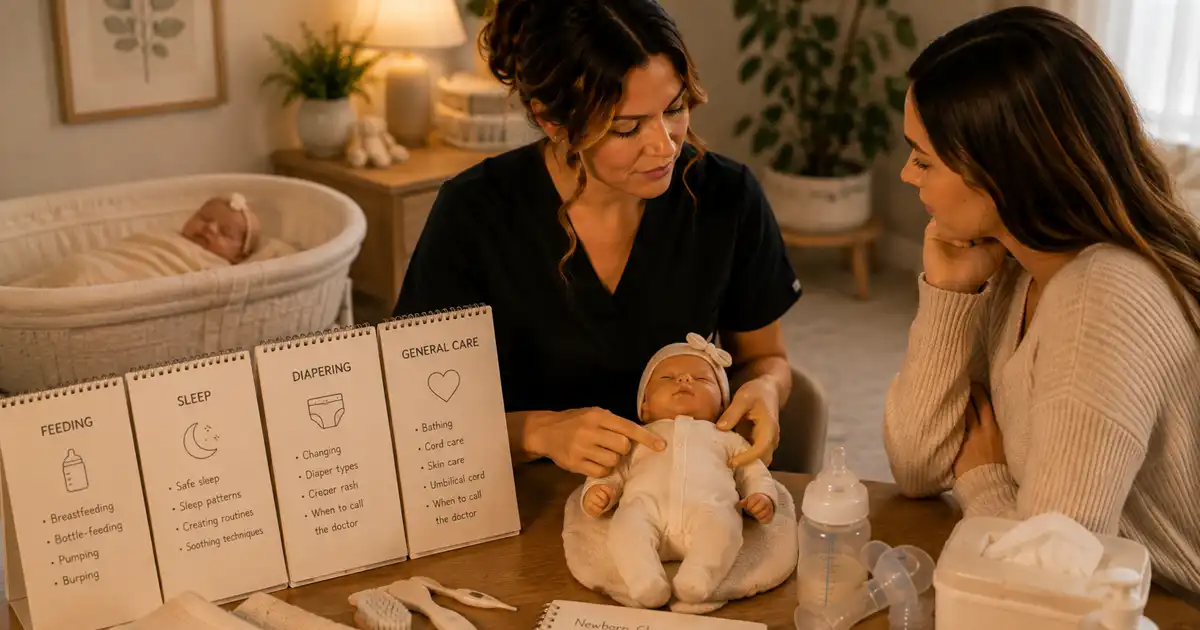
It covers the standard ground properly. Feeding basics, safe sleep, bathing, cord care, when to call. It is taught by people who do this constantly, and it is usually the best free thing available to you.
It is also efficient. Two hours, everything sequenced, no decisions to make.
If your budget is tight or your calendar is full, the hospital class is not a compromise. It is the right call.
Where the format runs out
Nobody can correct twenty people's grip. Most of newborn care is physical. How you support a head during a transfer, where your forearm sits during a feed, how tightly a swaddle should actually be. Those are corrected by someone watching you do it, not by watching a demonstration.
The questions you have are not the questions on the slide. They are specific, often slightly embarrassing, and frequently about your body or your circumstances rather than the baby's. Those do not get asked in a room.
A doll is not your baby. Practising on a demonstration doll is useful right up until the first time you handle something that moves unpredictably and makes noise.
What changes when it is your kitchen
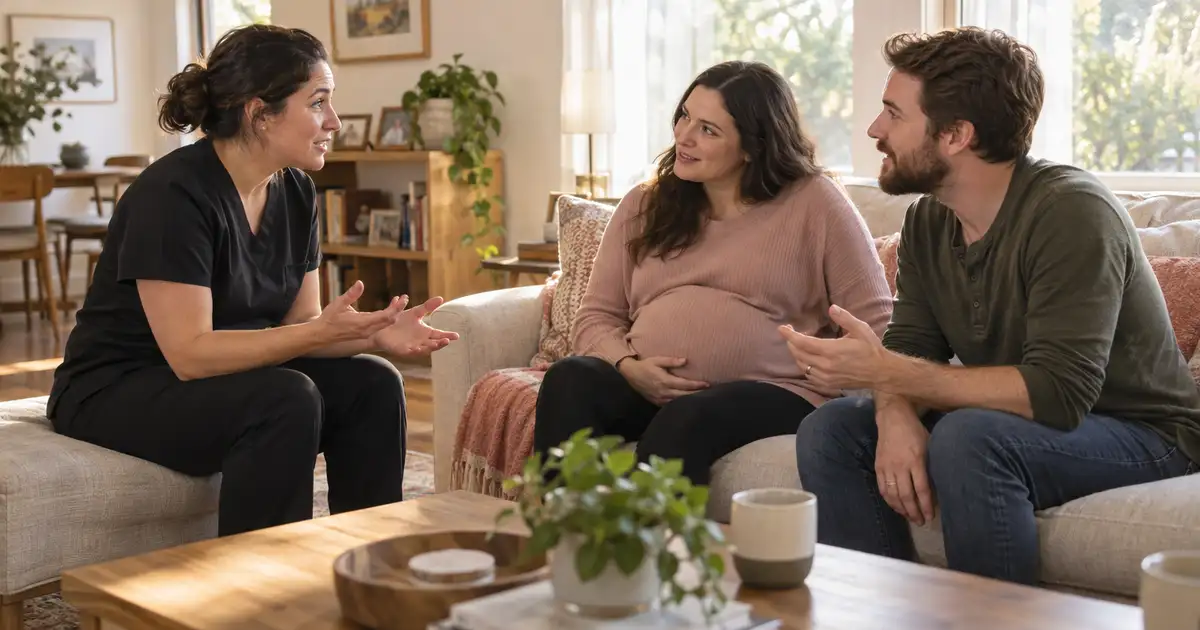
A private class happens in the house where all of this is going to occur, which changes what can be taught.
The bassinet you actually bought, in the room it actually sits in, with the light it actually has at 2am. The bottles you have, not the ones in the curriculum. Your sink, your counter height, your stairs.
Most of what we end up covering is not on anybody's syllabus. It is "that chair is going to hurt your back by week two", and "move the changing things to this side", and "hold her like this instead, you are working harder than you need to".
Who gets the most from it
- First-time parents with no hands-on newborn experience. Most of what feels frightening is mechanical, and mechanical things are fixable in an afternoon
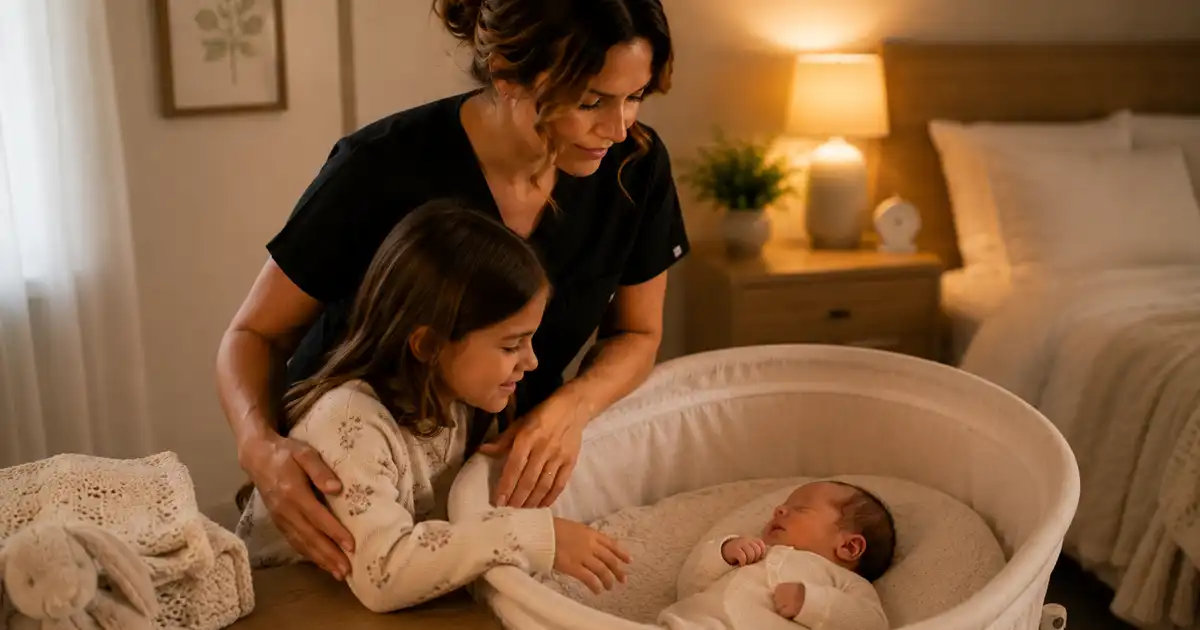
- Families where more than one person will be doing the care. Partners and grandparents taught together make the same decisions when it matters
- Anyone with a specific complication: twins, a preemie, a planned caesarean recovery, a feeding plan that is already unusual
- Second-time parents facing something new. The first one does not teach you the second one, particularly if the circumstances have changed
When you do not need one
Worth saying plainly, because we would rather tell you this than take the booking.
If you have had a baby recently, you have help lined up who has done it before, and you have no specific worries, you probably do not need a private class. Take the hospital one, ask your questions at your postpartum appointments, and spend the money on something else.
A class is worth it when there is a gap. It is not worth it as insurance against a feeling.
The short version
The hospital class teaches the curriculum. A private class teaches you, in your house, with your baby, answering the things you actually want to know.
Most families who book both say the same thing afterwards: the hospital class told them what to do, and the private one made them believe they could do it.
Common questions
Is a private newborn class worth it if the hospital offers one?
They answer different questions. A hospital class covers the standard curriculum well and costs nothing. A private class is built around what you specifically want and is hands-on, which is the part a room of twenty couples cannot deliver. Most families get value from both.
What does a private class cover that a hospital class does not?
Mostly the doing rather than the knowing. Somebody watching how you hold, swaddle, bathe and feed, and adjusting it in the moment. It also covers whatever you ask it to, including the questions you would not raise in a group.
Do we need one if this is not our first baby?
Plenty of second-time families book one, usually for something specific: a different feeding plan, a preemie, twins, or working out how the first weeks will run with an older child in the house.
Who should be in the room?
Anyone who will care for the baby. Partners, grandparents, and anyone doing overnight shifts. People who are taught together make the same decisions at 3am, which matters more than it sounds.
When would you tell us not to book one?
If you have done this recently, have hands-on help already lined up, and have no specific worries. We would rather say that than sell you a class you do not need.