What Should a Newborn Wear to Sleep?
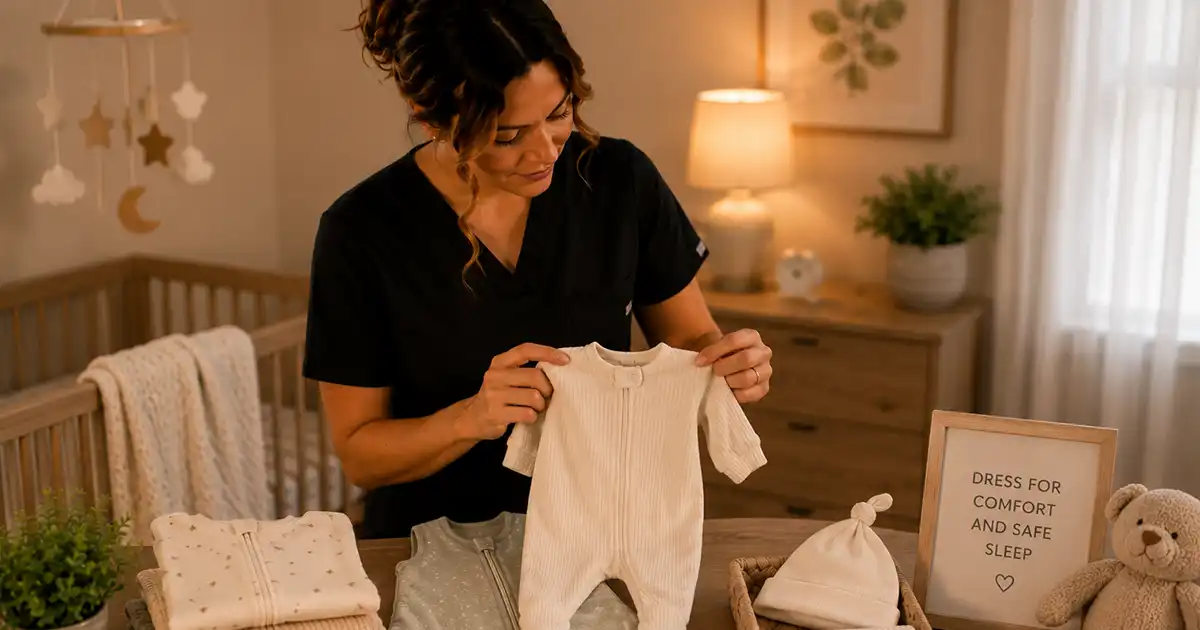
Roughly one more layer than you would wear comfortably in the same room.
That is the whole rule, and everything below is either how to apply it or how to tell whether you got it right.
Dress for the room, not the weather
This is where most people go wrong, and it is an easy mistake to make.
It is not about the season, or what the forecast says, or what you wore that day. It is about the temperature of the room your baby is actually sleeping in, which may be quite different from the rest of the house. Upstairs bedrooms run warmer. A nursery with the door shut and a monitor in it runs warmer than you would guess.
A February night in a well-heated room needs less than a September night in a room with a window open.
What "one more layer" means in practice
Think about what you would wear to sleep comfortably in that room, then add one thin layer.
If you would be comfortable in a t-shirt, your baby is probably fine in a onesie and a light sleep sack. If you would want long sleeves and a duvet, they need more than that. If the room is genuinely warm, a onesie on its own can be enough.
The layer is thin. It is not a sweater.
And on a first night home, when you have no idea what the room does overnight and everybody is anxious: pick the lighter option, and check them after an hour. That tells you more than any chart.
What about room temperature?
You will find a specific range quoted everywhere. Current guidance is less prescriptive than that, and deliberately so.
The standard is a temperature comfortable for a lightly dressed adult, with a clear warning about overheating rather than a mandatory number on a thermostat. Houses differ, thermostats read the hallway rather than the crib, and a number gives you false confidence.
If you are comfortable in the room, you are most of the way there. Then check your baby rather than the display.
How to tell if you got it wrong
Check the chest, the back of the neck, or the tummy. Warm and dry is what you want.
Do not use the hands and feet. Newborn hands and feet run cool almost regardless of how warm the rest of them is, and putting an extra layer on a baby who was already warm enough because their toes felt cold is one of the most common mistakes there is.
Signs of too warm: sweating, damp hair or a damp neck, flushed skin, feeling hot to the touch on the chest, breathing faster than usual, or being unusually restless.
Signs of too cool are rarer and less dramatic: a chest or back that feels genuinely cool to the touch, not just the extremities.
And if you cannot decide between two options, choose the cooler one. Overheating is the direction almost everyone errs in, and it is the one that matters more.
Do you need a sleep sack?
Not strictly. You need a way to keep your baby warm without a loose blanket, and a sleep sack is the easiest one.
In a warm room, a onesie or footed pajamas alone can be enough. In a cooler room, a sleep sack does the job a blanket used to without anything loose in the crib.
What matters more than owning one is the size. Too large and it can ride up over the face, which is the thing you are trying to avoid. Follow the weight and length on the label rather than buying big to grow into.
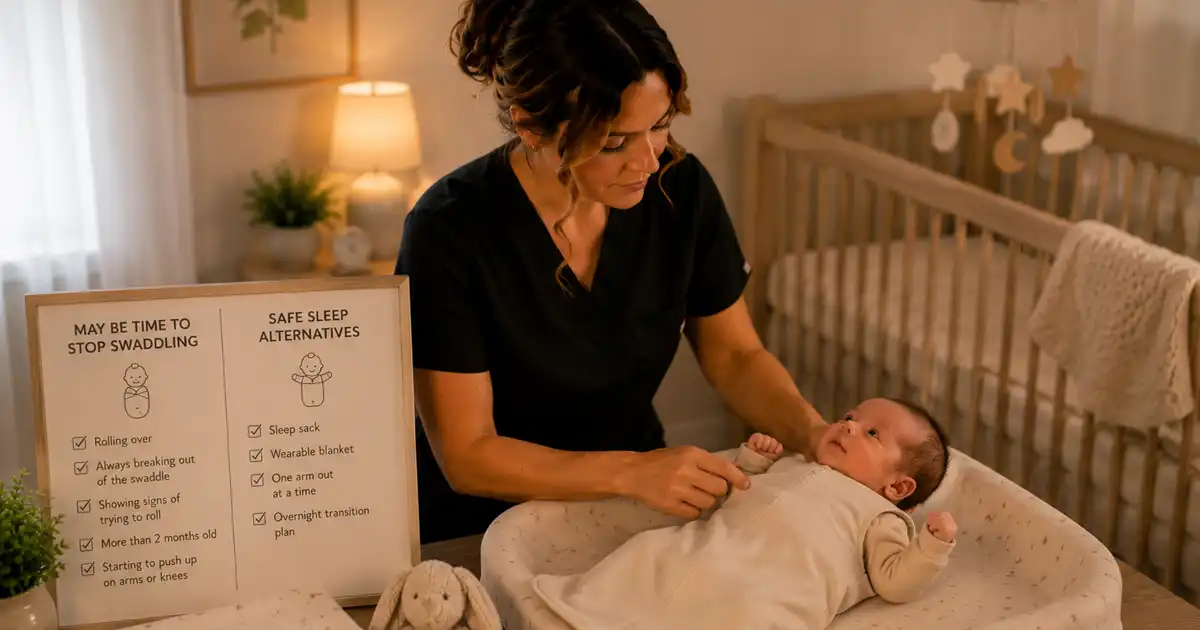
And nothing weighted, at any age. Not weighted sacks, not weighted swaddles, not weighted blankets. When to stop swaddling covers that in more detail.
What TOG ratings actually tell you
TOG is a measure of thermal insulation, and you will see it on most sleep sacks. Lower numbers are lighter.
It is genuinely useful for comparing one sack against another. A 0.5 TOG is lighter than a 2.5 TOG, reliably.
What it does not do is tell you what your baby should wear. TOG charts pair a rating with a room temperature and an outfit, and they are a starting point rather than an instruction, because they cannot account for your house, your baby, or what your baby is wearing underneath. Two babies in the same room in the same sack can need different things under it.
Use the chart on the packet to choose between sacks. Use your baby's chest to decide whether you got it right.
What goes underneath
Depends entirely on the sack and the room, which is why a single answer does not exist.
A common arrangement is a onesie or footed pajamas under a sleep sack, adjusted for how warm the room is. In a warm room, a short-sleeved onesie under a light sack. In a cool one, long sleeves under something heavier.
Cotton or fleece? Cotton breathes better and is the safer default. Fleece is warmer and easier to overheat in, so it wants a cooler room and less underneath.
Hats, socks, and mittens
No hats indoors for sleep. Babies lose heat through the head, which is part of how they regulate their temperature, and a hat that shifts down over the face is a hazard. Hats are for going outside.
Socks are fine if the room is cool and you want them on. What socks are not is a thermometer. There is no rule requiring or forbidding them, despite how confidently you will see one stated online. Check the chest.
Mittens are usually about scratching rather than warmth. Fine, if they fit properly and have nothing loose. Many babies do not need them, and nails filed short do the same job.
What is never safe, whatever the temperature
- Loose blankets, at any age, in any weather
- Anything weighted
- Hoods, ties, cords, or loose ribbons on sleepwear
- Anything oversized that can move up over the face
- Layering so heavily that your baby cannot move
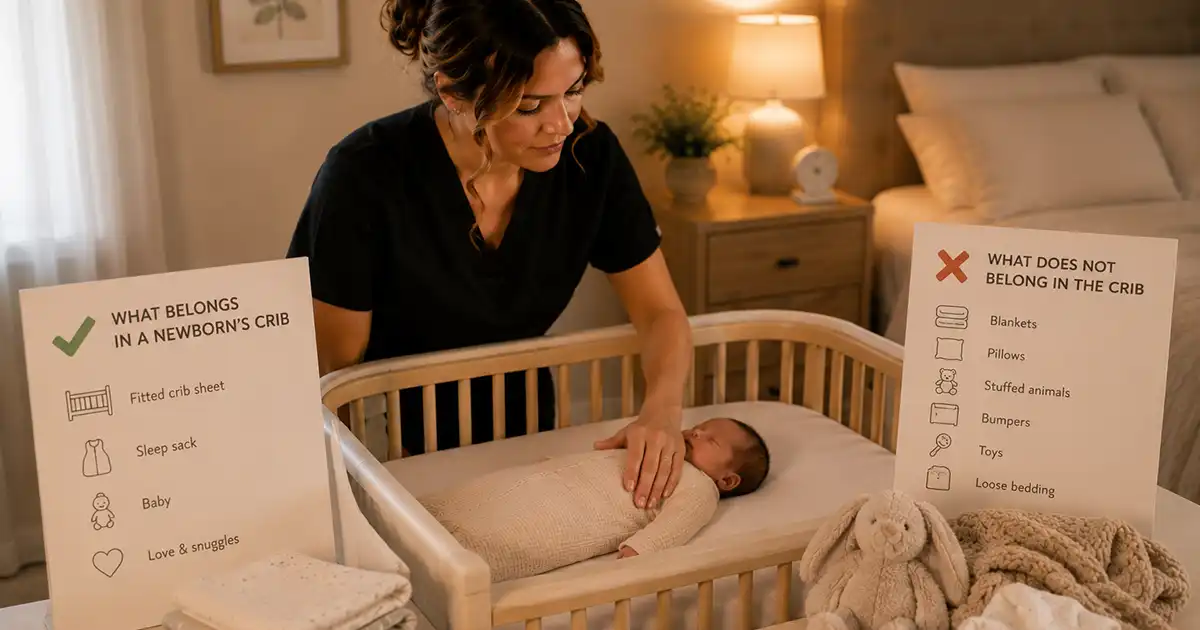
The crib itself stays empty regardless of how cold you think it is. What belongs in a crib is the short list.
Naps and nights are the same
There is no separate daytime standard. Same rules, same checks.
The thing that catches people out is that a room's temperature changes through the day. A nursery that is comfortable at 2pm with sun on the window may be considerably cooler at 2am, and the afternoon nap outfit is not automatically the right nighttime one.
Summer, winter, and preemies
In summer, less. A short-sleeved onesie, or a onesie and the lightest sack you have. Air conditioning changes this, so go by the room rather than the month.
In winter, more layers rather than heavier ones, so you can remove one. Still no blankets, and still no hats.
Preemies and smaller babies can have a harder time holding their temperature, and your team may have told you something specific. What they said wins over anything here. Sizing is also a real problem early on, since a sack that fits a term newborn may swamp a small baby, and swamping is the thing to avoid.
When to ask someone
Most of this is straightforward once you stop reading charts and start checking your baby.
Worth raising with your pediatrician if your baby feels persistently cold despite reasonable layers, feels hot without an obvious cause, is sweating heavily during feeds or sleep, or if you were given specific guidance about temperature that you are unsure how to apply.
A temperature you are worried about is a call, not a clothing question.
What to remember
- One more layer than you would wear comfortably in that room
- Dress for the room, not the forecast
- Check the chest or the back of the neck. Never the hands and feet
- Overheating is the direction most people get wrong. When unsure, go cooler
- Sleep sacks are the easy answer, and size matters more than owning one
- TOG compares sacks to each other. It does not tell you what your baby needs
- No hats indoors, no loose blankets, nothing weighted, nothing oversized
Getting it right
- Dress for the room, not the forecast or the season
- Roughly one more layer than you would wear comfortably in that room
- Check the chest or the back of the neck, never the hands and feet
- Warm and dry is what you are looking for
- Sweating, damp hair, or flushed skin means take a layer off
- No loose blankets, at any age, in any weather
- No hats indoors for sleep
- Sleep sack sized correctly so it cannot ride up over the face
- Nothing weighted, at any age
- Nothing with hoods, ties, cords, or loose ribbons
- If you are unsure between two options, choose the cooler one
- The same rules in the bassinet, the pack and play, and at grandparents
The last of the practical ones matters most. When you cannot decide, err cooler. Overheating is the direction almost everyone gets wrong.
Common questions
What should a newborn wear to sleep?
Dress for the room your baby is sleeping in, not the weather outside it. The usual guide is one more layer than you would wear comfortably in that same room.
How do I know if my baby is too warm?
Feel the chest or the back of the neck rather than the hands and feet, which run cool on almost every newborn. Sweating, damp hair and flushed skin all point at too warm.
What is a TOG rating?
A measure of how warm a sleep sack is. Higher numbers are warmer. It is a way of matching what your baby wears to the temperature of the room rather than guessing.
Do I need a sleep sack?
Not necessarily, but it is the usual way to keep a baby warm without a loose blanket, which does not belong in the sleep space. A safe sleep visit works through this in your own nursery.
Read the video transcript
The rule for what a newborn wears to sleep is one more layer than you would wear comfortably in the same room.
The important word there is room. Not the season, not the forecast, not what you wore that day. The temperature of the room your baby is actually sleeping in, which is often different from the rest of the house.
You will see a specific temperature range quoted everywhere. Current guidance is deliberately less prescriptive than that. It says comfortable for a lightly dressed adult, and it warns about overheating rather than giving you a number for the thermostat. If you are comfortable in the room, you are most of the way there.
Then check your baby, not the display. Chest, or the back of the neck. Warm and dry is what you want.
And please do not use the hands and feet. Newborn hands and feet run cool almost no matter what, and putting another layer on a baby who was already warm enough because their toes felt cold is one of the most common things I see.
On TOG ratings, because everyone asks. TOG is useful for comparing one sleep sack to another. A 0.5 is lighter than a 2.5, reliably. What it cannot do is tell you what your baby needs, because it does not know your house or what they are wearing underneath. Use the chart to pick between sacks. Use your baby's chest to decide if you got it right.
One last thing. If you are torn between two options, go with the cooler one. Overheating is the direction almost everybody errs in, and it is the one that matters more.