When Should You Stop Swaddling?
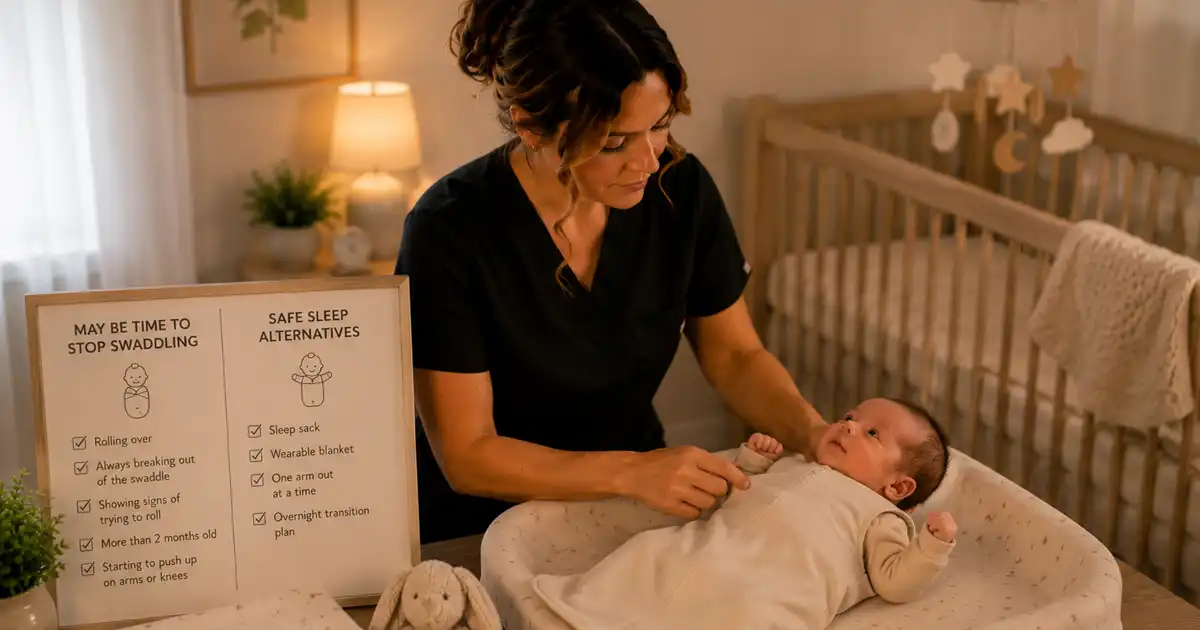
When your baby starts trying to roll. Not when they manage it.
For a lot of babies that lands somewhere around two to four months, but the age is the less useful half of the answer. Some babies show signs at six weeks. Others at five months. What you are watching is your baby, not the calendar.
The rule is the rolling, not the calendar
Here is the part worth sitting with: the first successful roll should not be the event that tells you the swaddle is no longer safe.
A swaddled baby who ends up on their stomach cannot use their arms. They cannot push up, turn their head as easily, or reposition themselves. That is the whole reason the swaddle has an endpoint, and waiting for a roll to prove it means the first time it happens, it happens with their arms pinned.
So you stop before that. When the attempts begin.
Signs it is time, before the first roll
These all happen while a baby still cannot roll, which is exactly why they get missed.
- Rocking or rolling side to side while swaddled
- Getting up onto one shoulder, even briefly
- Lifting the head and shoulders during tummy time
- Pushing hard against the swaddle, arching, or straining against it
- Working an arm out, repeatedly, however well you wrap it
- Escaping the swaddle most nights
Any one of these is enough. You do not need several, and you do not need to be certain. If you find yourself wondering whether it is time, that is usually the answer.
Why do people say eight weeks?
You will see this figure everywhere, and it is not guidance from anywhere official.
Where it comes from is real enough: some babies do start rolling at around eight weeks, and eight weeks is a memorable number. As a prompt to start paying attention, it is not unreasonable.
As a rule, it is wrong in both directions. A baby showing rolling signs at six weeks needs to stop at six weeks. A baby showing nothing at ten weeks does not have to stop because a chart said so.
Watch the baby. A safe sleep visit is one way to have someone look at what your baby is actually doing, in the room where they sleep.
Can you stop earlier? Yes
Swaddling is a tool, not a developmental requirement.
Plenty of babies dislike having their arms restrained from the very first night. Some sleep better with hands near the face. Some escape every wrap you attempt until you concede.
None of that is a problem, and never swaddling at all is a perfectly normal choice. Babies who are never swaddled sleep. If yours hates it, you have not failed at something.
How to make the transition
Two approaches, and neither is better. It depends on your baby and on your tolerance for a rough few nights.
One arm out, then both
Swaddle as usual with one arm free for a few nights, then the second, then move to a sleep sack. Gentler, and it gives a baby time to get used to the sensation in stages.
Or all at once
Straight from swaddle to sleep sack. Often a harder two or three nights and then done, rather than a longer stretch of gradual adjustment.
How long it usually takes
Most babies settle within a few nights to a week. Expect some unsettled sleep in that window, because you are changing something familiar, not because anything is wrong.
If it has been considerably longer than that and nothing is improving, worth mentioning at your next appointment.
Naps and nights do not have to match
You can transition naps first, when you are more likely to be awake and nearby, and keep nights as they are for a few days. It is not inconsistent. It is just easier.
What you should not do is keep swaddling at night once the rolling signs have appeared, on the basis that nights are harder. The reason to stop applies most at night.
What to use instead
A wearable blanket or sleep sack does what a swaddle did for warmth, with arms free and nothing loose in the crib. Get the size right so it cannot ride up over the face.
Underneath, roughly what you are wearing plus one thin layer.
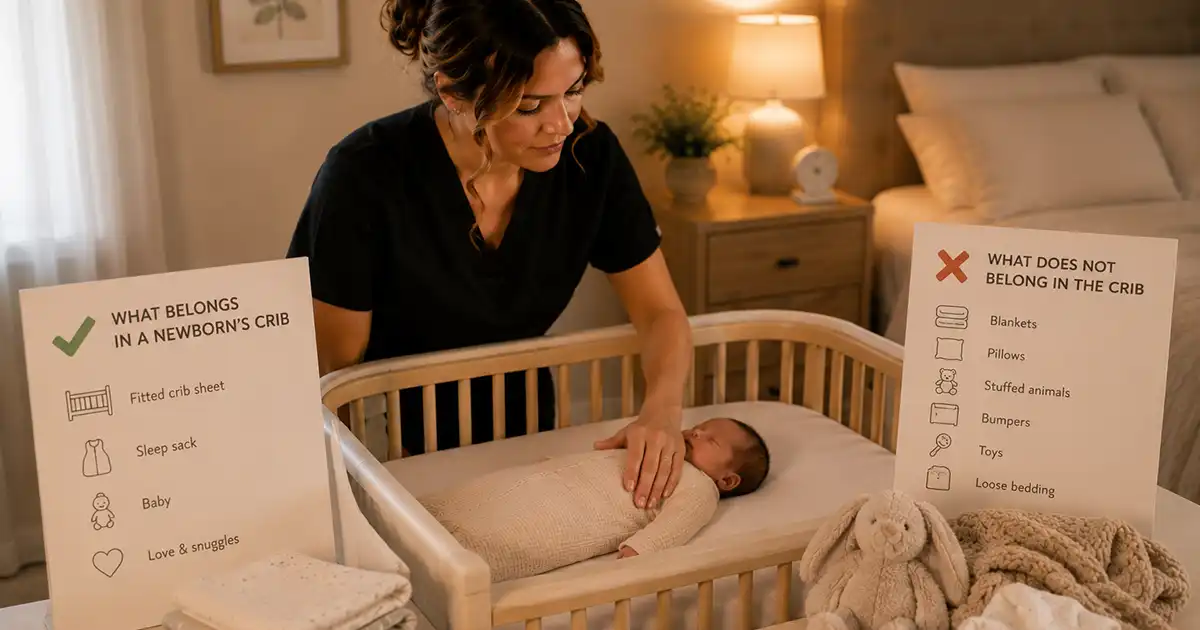
Everything else in the crib stays out, and what belongs in a crib covers the rest of that list.
Transition products, honestly
There is a whole category of products marketed for this moment, with arms in pods, weighted panels, and various amounts of padding.
I would not rank brands, and I would not tell you that you need one. Most babies do not. If you are considering one, four things to check:
- Are the arms genuinely free, or just loosely contained?
- Is it the right size for your baby's weight and length, per the manufacturer?
- Is it weighted? See the next section
- Does it restrict movement? If your baby is attempting to roll, anything that limits that has to go
And stop using any of them the moment rolling attempts begin, whatever the box says about age ranges.
Weighted swaddles and weighted sleep sacks
No. Not at any age, not for naps, not for nights.
The American Academy of Pediatrics, NIH Safe to Sleep, and the Consumer Product Safety Commission all advise against weighted sleep products for infants. The concerns are added pressure on the chest, breathing, and a baby's ability to move and reposition.
They are widely sold and heavily marketed to exhausted parents, which is exactly why it is worth stating plainly. If you have been given one, it does not go in the crib.
"My baby only sleeps when swaddled"
This is the real reason most people search for this, and the fear underneath it is that stopping means losing the only sleep you are getting.
A few honest things.
Sleep often does get worse for a few nights. Not always, but often enough that you should expect it rather than be blindsided by it. It is a temporary adjustment, not a permanent trade.
A sleep sack keeps some of what the swaddle gave you: the warmth, the snugness around the body, the sense of being contained. It is a smaller change than it feels.
And the startle is not the only thing waking them. Newborns wake. Some of what you are attributing to the swaddle coming off would have happened anyway.
If your baby genuinely cannot settle at all after a week or so, that is worth raising with your pediatrician rather than going back to swaddling past the point where it is safe. And if the nights themselves have become unmanageable, a Birmingham night nurse is a different kind of answer to the same problem.
What about the startle reflex?
It fades on its own, usually somewhere in the first few months. You are not managing it forever.
In the meantime: a snug sleep sack, a calm and dark room, a settled routine before sleep, and putting your baby down already drowsy rather than fully asleep, so a startle at the moment of transfer is less likely to wake them fully.
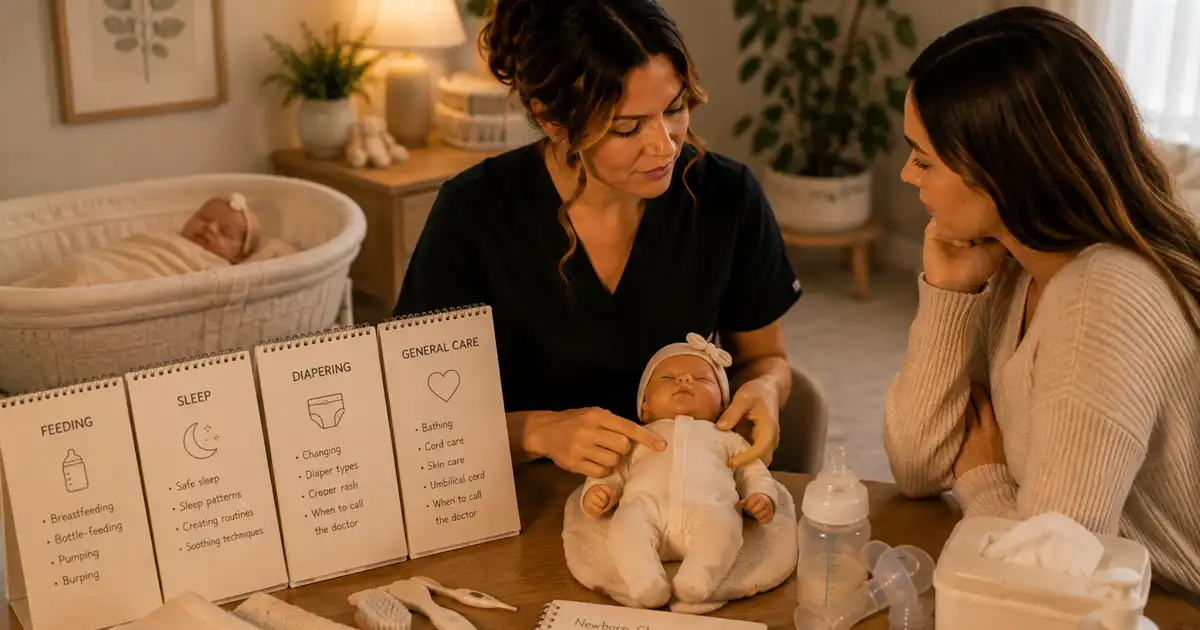
Hands near the face help some babies self-settle, which is one of the quiet benefits of arms being free. If settling is the harder half of your night generally, that is worth working through with someone rather than reading about, and it is one of the things a private newborn class covers hands-on.
What if they roll onto their stomach after you stop?
Once a baby can roll both ways on their own, you do not have to keep turning them back through the night. They got there under their own power and they can get back.
What does not change: you still place them on their back to start every sleep, every time, and the crib still has nothing in it.
If your baby rolls onto their stomach and cannot roll back yet, that is another reason the swaddle needed to come off when it did.
What to remember
- Stop when your baby starts trying to roll, not when they succeed
- The signs come before the first roll, which is why people miss them
- Eight weeks is a memorable number, not a rule
- Swaddling is a tool. Never swaddling is a normal choice
- One arm at a time or all at once, both work
- No weighted swaddles, sacks, or blankets, at any age
- Expect a few rough nights, and give it about a week
- Back to sleep, every sleep, swaddled or not
Signs and steps
- Rocking or rolling side to side while swaddled
- Getting up onto one shoulder
- Lifting head and shoulders during tummy time
- Pushing hard against the swaddle or working an arm free
- Escaping the swaddle regularly
- Stop swaddling at any of the above, before the first full roll
- Switch to a wearable blanket or sleep sack, nothing loose
- Keep placing your baby on their back, every sleep
- Do not use weighted swaddles, sacks, or blankets at any age
- Check any transition product: arms free, correct size, not weighted
- Expect a few unsettled nights, and give it about a week
- Naps and nights do not have to change on the same day
The first four are the ones people miss, because they all happen before a baby can actually roll. That is the window you are watching for.
Common questions
When should you stop swaddling?
At the first signs your baby is trying to roll, not after they manage it. That is usually somewhere around two to four months, but the signal is what your baby is doing rather than the calendar. If you are seeing rolling attempts, the swaddle comes out of the routine.
What are the signs a baby is ready to stop being swaddled?
Rolling attempts are the one that matters: pushing up on one side, rocking, getting a shoulder off the mattress. Fighting the swaddle, breaking an arm out consistently, or startling less than they used to are all reasonable prompts to move on too.
Do I need to stop swaddling cold turkey?
You do not. Many families move to one arm out for a few nights, then both, then a sleep sack. A sleep sack keeps the warmth and the familiar feeling without restricting the arms, which is what makes rolling unsafe in a swaddle.
Are weighted swaddles or weighted sleep sacks safe?
We do not recommend weighted sleep products. Follow current safe sleep guidance and your pediatrician's advice, and if a product is marketed on how deeply it makes a baby sleep, treat that as a reason for caution rather than a feature.
Read the video transcript
The answer to when you stop swaddling is when your baby starts trying to roll. Not when they actually roll.
That distinction matters more than anything else here. If you wait for the first successful roll, then the first time your baby ends up on their stomach, it happens with their arms pinned. And a swaddled baby cannot push up or reposition themselves.
So what you are watching for is the attempts. Rocking side to side. Getting up onto one shoulder. Lifting the head and shoulders in tummy time. Pushing hard against the swaddle. Getting an arm out no matter how well you wrap it.
Any one of those is enough.
People will tell you eight weeks. That is not guidance from anywhere official. Some babies do start rolling around then, and it is a memorable number, so it gets repeated. But a baby showing signs at six weeks needs to stop at six weeks, and a baby showing nothing at ten weeks does not have to stop because of a chart.
You can also stop earlier for no reason at all. Swaddling is a tool, not a requirement. Plenty of babies hate it from the first night, and babies who are never swaddled sleep just fine.
One thing I want to be really clear about. No weighted swaddles, no weighted sleep sacks, no weighted blankets. Not at any age. The AAP, NIH Safe to Sleep, and the Consumer Product Safety Commission all advise against them, and they are sold everywhere and marketed hard at exhausted parents.
And if you are worried because your baby only sleeps swaddled, expect a few rough nights and give it about a week. A sleep sack keeps a lot of what the swaddle gave you. It is a smaller change than it feels like from where you are standing.